
A serious health risk could be hiding beneath your home, and you may have no way of sensing it. Radon is an odorless, tasteless and invisible radioactive gas that travels up from the ground beneath your foundation into your living space without warning.
Finding out your home has elevated radon can be unsettling. Confusion about where it comes from and what it means for your family is completely normal. Understanding how this gas moves from the soil through your foundation is the first step in protecting your household.
The Radon Source Beneath Your Home
Radon forms through a natural underground process. Uranium exists in nearly all soil and bedrock across the country. Over time, it breaks down into radium, which then decays into radon gas. Because uranium is present in most soil and rock, any property can have some level of radon risk.
The amount of radon your soil produces depends on its specific makeup. Homes a few doors apart can show very different radon levels because soil chemistry varies by location. How much actually makes it into your home depends on soil porosity, moisture content and indoor air pressure.
Each property has unique soil conditions that influence radon production and movement. Learning more about what radon is helps you understand why this gas behaves differently from one home to the next.
Soil Type and Your Radon Risk
How radon travels toward your foundation depends on the type of soil beneath your property. Soil permeability controls how quickly the gas can migrate upward.
Radon in Sandy Soil
Sandy and gravelly soils have an open pore structure that allows gases to move freely. This high gas permeability means radon can travel quickly from deeper soil layers up toward your foundation. If your home sits on sandy soil, radon faces very little resistance on its journey upward.
Coarse soils allow gas to move in a steadier pattern. While clay changes with weather and moisture, sandy soil often maintains similar permeability throughout the year. As a result, homes built on sandy soil may allow radon to move upward more regularly instead of only under certain seasonal conditions.
Radon in Clay Soil
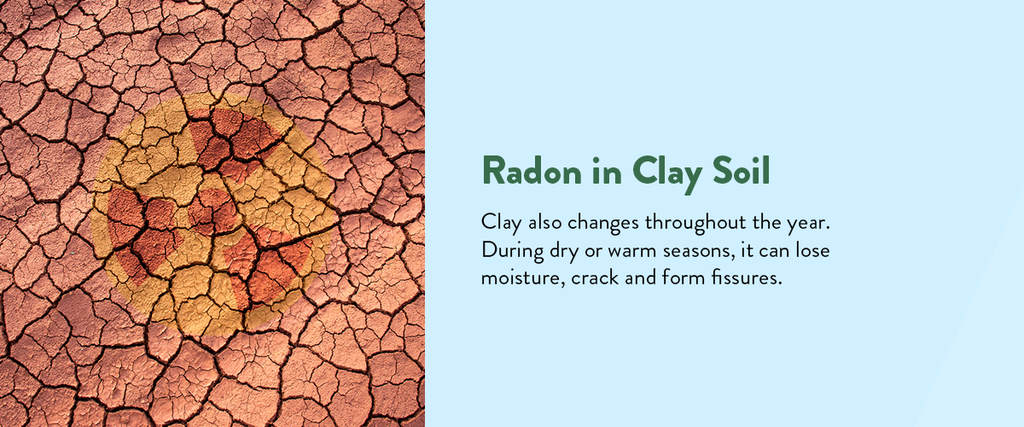
Clay’s dense texture can slow radon migration, but it doesn’t block exposure entirely. Instead, clay can hold gas beneath the surface until changes in weather or moisture create new pathways for the gas to move toward your home.
Clay also changes throughout the year. During dry or warm seasons, it can lose moisture, crack and form fissures. Gas permeability in clay soils can vary between 100 and 1,000 times through an annual cycle, depending on moisture and climate. When these cracks appear, trapped radon can move more easily, which may lead to sudden increases in indoor levels.
How Radon Moves Through Soil Into Homes
Once radon gas in soil under the foundation reaches your home, it doesn’t need much of an opening to get inside. Your home is usually at a lower air pressure than the surrounding soil. This pressure difference causes your house to act like a vacuum, pulling radon-bearing soil gas upward through any available gap or crack.
Radon can get into your home through several common entry points:
- Cracks in foundation slabs and walls: Even hairline fractures can create a path where radon gas passes through foundation cracks and enters your home.
- Gaps around utility penetrations: Spaces around pipes, wiring and other utilities that pass through your foundation create direct pathways for soil gas to enter.
- Construction joints: The seams where foundation walls meet floors are rarely perfectly sealed. These joints offer natural entry points for radon.
- Sump pits and floor drains: Open sumps and drainage features create direct contact between your indoor air and the soil beneath your home.
Your foundation might look solid, but radon doesn’t need visible damage to get inside. Microscopic gaps and porous concrete are often sufficient.
Foundation Types and Radon Entry
The way your home is built affects how radon moves from soil into your living space. Different foundation designs interact with soil gas in distinct ways:
- Basement foundations: Because basement walls and floors sit below ground, they have more contact with surrounding soil. Basements and lower levels are more likely to have higher radon levels, and cracks, joints, or other openings can give radon more opportunities to enter the home.
- Slab-on-grade foundations: These place your living space directly over the ground with only a concrete barrier between you and the soil. Any cracks or gaps in that slab can allow radon to enter your indoor air.
- Crawlspace foundations: The exposed earth floor in a crawlspace allows radon to accumulate in the enclosed area beneath your home. From there, it can rise through floor openings and gaps into your living areas.
Your foundation type helps determine which mitigation approach will work best. Active soil depressurization (ASD) systems can reduce indoor radon levels by up to 99% when properly installed, depending on the system type and home conditions.
Your Family’s Health and Radon Exposure
Radon is a Class A carcinogen. Long-term exposure causes approximately 21,000 lung cancer deaths each year in the United States, making it the second leading cause of lung cancer.
What makes radon harmful is its silent nature. Lung cancer from radon exposure may develop 5 to 25 years after exposure, with no symptoms during that time. You can’t feel radon affecting your lungs. There’s no cough or discomfort to warn you. The damage happens gradually until cancer develops years later.
According to the EPA, the average indoor radon level in U.S. homes is 1.3 pCi/L, and the recommended action level is 4.0 pCi/L. However, there is no known safe level of radon exposure.
Understanding radon’s health risks helps put your soil and foundation concerns into perspective. The reason soil permeability and foundation cracks matter is that they directly affect how much of this gas reaches your family.
Steps to Reduce Your Home’s Risk
Testing is the only way to know your actual radon level. Taking action to protect your home and family involves a few straightforward steps:
- Test your home: Radon testing is the first step in checking your home’s indoor air quality. You can test your home for radon to get reliable results and determine whether mitigation is needed.
- Evaluate your results: If your test shows levels at 4.0 pCi/L or higher, mitigation is needed. Even if results fall between 2.0 and 4.0 pCi/L, you should consider taking action to reduce exposure.
- Install mitigation if needed: For many existing homes, ASD is the standard mitigation approach. An active soil depressurization system addresses the problem at its source by creating negative pressure beneath your foundation, intercepting radon before it gets into your home.
- Maintain your system: Mitigation systems require minimal maintenance once installed. The EPA recommends testing your home every two years, even after a system is in place, to confirm it continues working effectively.
You can learn more about how radon mitigation works and what to expect during installation. Working with certified technicians ensures your system is designed correctly for your specific soil type and foundation design.
Get a Quote From SWAT Environmental
Radon from your soil doesn’t have to put your family at risk. With the right mitigation system and support from trained specialists, you can significantly reduce indoor levels and create a safer home environment.
SWAT Environmental has completed hundreds of thousands of radon system installations across the country. Our certified specialists handle every project with care and expertise, using active soil depressurization technology that intercepts gas before it enters your living areas. Homeowners turn to us for a radon mitigation system that creates a healthier indoor environment.
Want to protect your family and home? Explore our pricing information for mitigation work or call 1-800-NO-RADON for expert guidance. Contact us today to arrange your consultation.