
Finding out you have a radon problem in your property can be stressful. Thankfully, radon mitigation systems provide a reliable way to reduce radon levels and reduce the risk of lung cancer from radon exposure. SWAT Environmental is America’s largest radon mitigation provider, and we’re ready to help.
What Is a Radon Mitigation System?
A radon gas mitigation system vents radon from beneath your foundation to the outdoors and away from your living spaces. These systems operate quietly and efficiently.
The Nation’s Leader in Radon Mitigation System Installation
Here’s why you can trust us for your radon mitigation solutions:
- Unmatched experience: Get the peace of mind that comes with working with an installer you can trust. Since 1988, SWAT Environmental has grown to become the largest radon mitigation company in the country. We’ve successfully installed hundreds of thousands of systems in that time.
- Speed and reliability: If you’re a real estate agent, you need to close deals quickly. For homeowners, speed is of the essence, too, because you want to protect your home as quickly as possible. That’s why we offer rapid response times and efficient installations.
- Respect for your property: All our technicians are highly trained, background-checked professionals who treat your property with care.
- Long-lasting results: Our fans carry a five-year warranty and often last longer.
Protect the ones you love from radon. Have your home tested and contact SWAT Environmental should a radon threat exist in your home.
1-800-NO-RADON
Request More Information
"*" indicates required fields
Radon Mitigation System Installation
SWAT Environmental installs warrantied radon mitigation systems throughout the United States. Click on a state below to get in touch with a radon mitigation specialist near you:

























Standard Sub-Slab Depressurization Installation
Standard Sub-Slab Depressurization Installation: Sub-slab depressurization radon mitigation systems are installed in homes or businesses with slab flooring.
Learn how sub-slab depressurization systems function to reduce radon gas in your home or workplace

Interior Sub-Slab Depressurization Installation
Interior Sub-Slab Depressurization Installation: Interior sub-slab depressurization radon mitigation systems create a negative pressure under the home. Learn how interior sub-slab depressurization systems function to reduce radon gas from your home or establishment.

Exterior Sub-Slab Depressurization Installation
Exterior Sub-Slab Depressurization Installation: Exterior sub-slab depressurization radon mitigation systems are installed outside the home or business and are one of the most widely used methods for removing radon gas. Learn how exterior sub-slab depressurization systems reduce radon gas.

Crawlspace Membrane Depressurization Installation
Crawlspace Membrane Depressurization Installations: Crawlspace depressurization radon mitigation systems work by sealing off the crawlspace in your home or building. Learn how crawlspace depressurization reduces radon gas in your home or establishment.

Second Tap Attic Sub-Slab Radon System Installation
Second Tap Attic Sub-Slab Radon System Installation: A second tap sub-slab attic radon mitigation system is installed in homes or businesses with slab flooring. The sub-slab depressurization with a second tap reduces radon gas in your home or establishment.

Second Tap Sub-Slab Radon System Installation
Second Tap Sub-Slab Radon System Installation: A second tap sub-slab radon mitigation system is used in homes or businesses with slab flooring where a single tap or collection point is not adequate enough to bring radon levels down to a safe level. A sub-slab depressurization with a second tap drives down radon levels in your home or workplace, making the air safer for all.

Garage Attic Radon System Installation
Garage Attic Sub-Slab Radon Mitigation System: A garage attic radon mitigation system is used with slab flooring and involves running piping from the sub-slab radon collection point to the fan in the attic of the garage. The sub-slab depressurization method paired with the right exit point in your garage attic will promote the reduction of radon levels, keeping your friends and family safe from radon exposure.

Second Tap Garage Attic Radon System Installation
Second Tap Garage Attic Radon Mitigation System: A second tap garage attic radon mitigation system works by creating a negative pressure under the home where the radon collection points have been established. Learn how a sub-slab depressurization with a second tap mitigation system functions to reduce radon gas.

Passive Radon System Activation
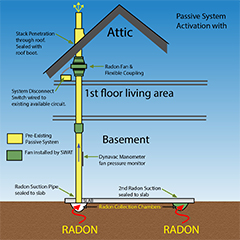
Passive Radon System Activation: A passive radon mitigation system activation is for homes or businesses with existing passive systems. Learn how the passive radon gas mitigation system functions.
Passive Radon System Activation with Second Tap
Passive Radon System Activation With Second Tap: A passive system activation with a second tap is installed in homes or businesses where the radon level has increased over time and the current passive system can’t handle the current radon level. Learn how a passive system with a second tap already installed can function to once again reach safe levels of radon in your home or workplace.

Looking for additional resources or testing kits?
We want to provide you with as much information as possible regarding the effects of radon and radon gas. Consider these additional resources as you learn how to protect you, your family and friends from radon gas exposure.
Check out some of our additional radon resources.
1-800-NO-RADON
How Does a Radon Mitigation System Work?
Most radon mitigation systems work using the active soil depressurization method. This method creates a vacuum beneath your property’s foundation, using a fan to draw radon gas from the soil through a pipe. The pipe safely vents the gas outside, preventing it from entering your living space.
Other radon mitigation systems include:
- Passive radon mitigation systems: These systems use natural air pressure differences and convection to draw radon through a pipe and vent it outside your property.
- Crawl space mitigation: For homes with crawl spaces, a vapor barrier seals any exposed earth, while a fan-powered system draws radon from beneath the barrier and vents it safely outside.
- Second tap systems: For larger or more complex foundations, these systems involve creating multiple suction points or taps under slabs to ensure a uniform negative pressure and better radon reduction.
Frequently Asked Questions About Radon Mitigation Systems
Let’s answer some common questions you might have about radon mitigation systems.
How Much Is a Radon Mitigation System?
Radon mitigation system installation costs vary depending on the home’s size, foundation type and radon levels. SWAT provides a free, no-obligation quote so you have full transparency to make your decision.
How Long Does a Radon Mitigation System Installation Take?
A typical residential radon mitigation system takes two to four hours to install. The length of your installation depends on various factors like the type of system, where it is being installed and the complexity of the project.
Is There Any Radon Mitigation System Maintenance?
Radon mitigation systems are low-maintenance. You will need to check the fan is operating correctly periodically by checking your pressure gauge.
Trust America’s Largest Radon Mitigation Provider
Protect your property’s occupants from the lung cancer risk of radon with America’s leading provider of radon mitigation solutions. Whether you own a single-family home or manage multiple properties, we can install radon mitigation systems quickly and reliably.
Request your free quote online now or call 1-800-NO-RADON.