
Radon is a potentially lethal gas with many severe side effects. Since it is completely odorless, colorless and tasteless, it’s impossible to detect without testing. In winter, our families spend more time indoors, making it a crucial time to check radon levels to prevent harmful exposure.
The Danger of Radon
In addition to being hard to detect, radon is a highly toxic substance. It’s a naturally occurring gas that forms when radium in the soil breaks down. The resulting particles are radioactive and present in the air we breathe. Exposure to radon is the second-leading cause of lung cancer in the United States, and the primary cause in nonsmokers.
The Relationship Between Radon and Winter
Radon and winter have a complex relationship, which raises some significant questions about radon testing in the cold seasons. We’ve answered a few of the most common questions to help you better understand this phenomenon.
Does Cold Weather Increase Radon?
It isn’t strictly accurate to say that low temperatures or cold weather increase radon. While radon levels are often higher in winter, it’s not because more of the gas is being produced.
Homes are generally kept closed tightly in the colder months. With doors and windows almost constantly sealed, the number of potential escape routes diminishes. The same amount of radon has fewer channels to leave a building, leading to more concentrated levels inside.
Why Are Radon Levels Higher in the Winter?
Several factors are responsible for elevated radon in cold weather conditions, including:
- Ground sealing: Snow is a surprisingly efficient insulator. When enough of it piles up, it can prevent radon from escaping into the atmosphere as it usually would. Your home, however, has no insulation beneath the foundation, leaving an excellent channel for radon to enter the building.
- Reduced ventilation: In winter, most people close their homes tightly to prevent an influx of cold air. When radon seeps into these homes, it is effectively trapped, leading to rapid increases in the radon levels.
- Stack effect: In winter, you warm your home, while the air outside remains cold. The resulting pressure differential can draw radon into your home, increasing levels unintentionally.
HVAC systems can exacerbate these problems by drawing in radon-rich air more rapidly.
Does Cold Weather Affect Radon Testing?
Yes, cold weather significantly affects radon testing, with levels generally being higher in the winter. Since most people also spend considerably more time indoors in the winter, this is a somewhat concerning confluence.
How to Test for Radon
Radon testing is a reasonably simple endeavor that requires little effort. Some test kits are even available for free. Kits will generally come with all the instructions you need to complete the test. Two types of radon tests are common — short-term and long-term.
Short-Term Radon Testing
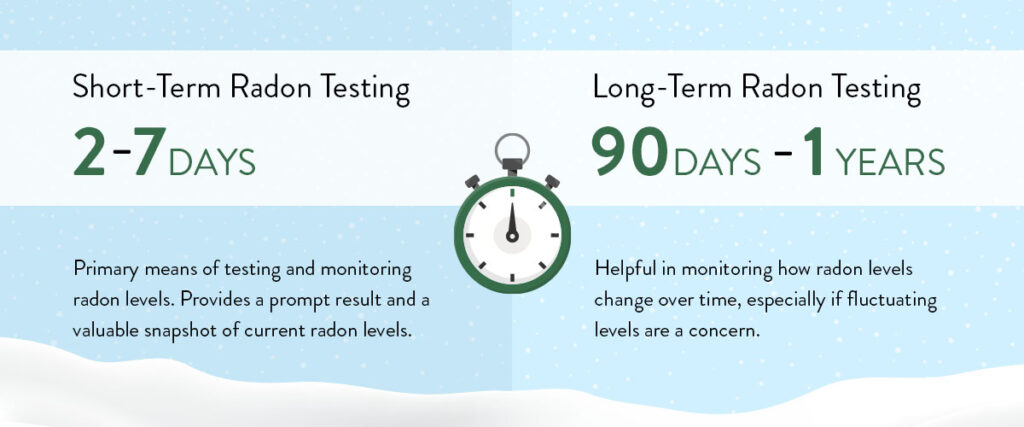
Short-term radon tests are the quickest solution for testing radon levels. They stay in the home for two to seven days and provide a valuable snapshot of current radon levels.
There are various kinds of short-term radon tests to choose from, including:
- Alpha track detectors
- Charcoal canisters
- Charcoal liquid scintillation detectors
- Cardboard kits
Since they provide prompt results and can be performed regularly to keep tracking changes, short-term radon tests are the primary means of testing and monitoring radon levels. The downside is that a single test will only provide a short-term overview. These kits aren’t ideal for gauging the presence of radon over a longer duration of time.
Long-Term Radon Testing
Longer-term test kits stay in the home for a longer time, generally between 90 days and a year. They’re helpful in monitoring how radon levels change over time, especially if fluctuating levels are a concern. If short-term tests show unusual amounts of variation, specialists may suggest using a long-term test kit to better understand the situation.
Continuous radon monitors are similar in that they stay long-term, but they produce regular readouts to give a more comprehensive picture when it’s needed.
When to Test for Radon
Although radon levels are generally higher in the winter, it can be challenging to determine whether you need to test your home’s radon levels. It’s a good idea to test the radon levels:
- If your home’s radon levels have never been tested.
- Before and after you complete building renovations.
- When preparing to buy or sell a home.
- When revamping a basement or attic as a living area.
Furthermore, if you live in a declared radon red zone, it’s a good idea to test the radon levels every two years. The Environmental Protection Agency (EPA) has done comprehensive studies and research to classify the United States according to average radon levels, making it easier to know whether your home is in a high-risk area.
What to Do if Your Home Has Elevated Radon Levels
If you find your home has elevated radon levels, there are several things you can do to help prevent radon infiltration and to reduce the current concentration. Some of the best ways to manage radon levels include:
- Sealing foundation cracks: You can prevent radon infiltration by sealing all the holes, gaps and cracks in your home’s foundation. As the primary way that radon rises into your home, these cracks are one of the main reasons for concern.
- Improving ventilation: Without sufficient ventilation, radon concentrations can quickly become unhealthy. By installing extra ventilation or a radon fan for cold-weather seasons, you can help reduce the gas to safer levels.
- Installing radon mitigation: In some cases, the best way to manage radon levels is by installing radon mitigation. These systems work by pulling radon-contaminated air from beneath your home and venting it harmlessly into the atmosphere, where it dissipates and is diluted by fresh air.
It’s worth noting that elevated levels can sometimes be temporary, but it’s always best to get a professional opinion.
SWAT Environmental has years of experience installing radon mitigation systems for cold weather and warmer climates. We can help make your home a safer and healthier place.

Get Help Managing Radon Levels
If you’re unsure whether your home has elevated radon levels, testing is the first step for peace of mind. You can discuss the results with a professional and plan radon mitigation if needed. If you have any questions, contact SWAT Environmental today. We’re here to help you breathe easier this winter and beyond.